


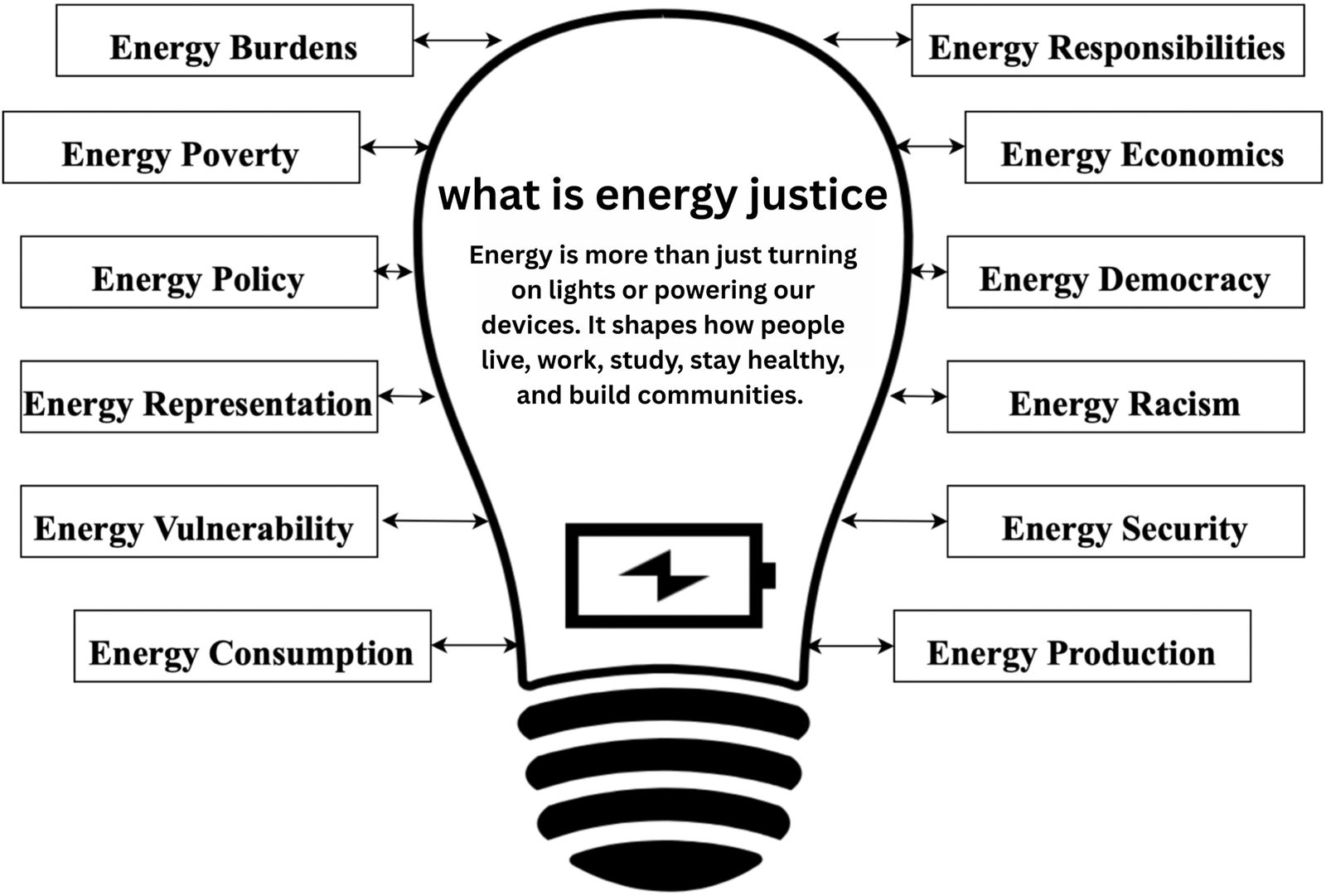
Energy is more than just turning on lights or powering our devices. It shapes how people live, work, study, stay healthy, and build communities. But energy systems don’t always treat everyone fairly. That’s where what is energy justice comes in. It is a framework that insists energy should be a basic human right, not a privilege for a few. Understanding what is energy justice helps us see who benefits and who suffers in energy systems — from fossil fuel plants to renewable energy projects. It asks: Are the benefits and burdens of energy production, distribution, and consumption shared fairly across society?
At its core, what is energy justice combines social ethics, human rights, environmental protection, and fairness. It emphasizes that energy is not just a commodity but a service and a necessity that should be accessible to all. Scholars often highlight three core principles of what is energy justice: distributional justice, procedural justice, and recognition justice. Some frameworks even include restorative or cosmopolitan justice, focusing on repairing past harms and considering global impacts of energy systems.
Core Principles of Energy Justice
Distributional justice focuses on fairness in who gets energy, who pays for it, and who suffers from environmental harm. Historically, low-income communities, minorities, and rural areas have been burdened with polluting energy facilities while having limited access to affordable energy. Understanding what is energy justice ensures that benefits and burdens are shared equitably across society.
Procedural justice emphasizes fair decision-making. It asks who participates in planning and policy-making. Communities affected by energy projects should have meaningful input, not just be passive recipients of decisions made by distant authorities. Recognizing what is energy justice allows local voices to shape energy systems that are responsive to all populations.
Recognition justice acknowledges that communities have different histories, cultures, and vulnerabilities. It requires energy systems to account for these differences and prioritize the needs of marginalized or historically disadvantaged groups. By understanding what is energy justice, planners can ensure inclusivity in energy access and decision-making.
Why Energy Justice Matters
Energy justice is critical because energy systems amplify inequalities. Historically, disadvantaged communities have suffered disproportionately from environmental hazards like air and water pollution. These communities often face higher energy costs and less reliable access to electricity. Meanwhile, wealthier communities benefit from clean energy and infrastructure improvements. Learning what is energy justice highlights the importance of rectifying these imbalances to make energy access fair for everyone.
Energy poverty is a significant concern. Many households spend a large portion of their income on energy or lack access to safe, reliable, and clean energy sources. This can affect health, education, and overall quality of life. Understanding what is energy justice frames energy access as a human right, ensuring that everyone can meet their basic energy needs.
The transition to renewable energy brings both opportunities and challenges. Clean energy technologies like solar and wind reduce pollution and greenhouse gas emissions, but without careful planning, the benefits may not reach all communities equally. Poor or rural areas may lack access or the financial means to adopt them. What is energy justice ensures that the shift to clean energy is equitable and inclusive, benefiting all communities instead of deepening inequalities.
Health, environmental, and human rights considerations are central to what is energy justice. Fossil fuel-based energy systems often bring pollution and climate risks, disproportionately affecting vulnerable communities. Energy justice advocates reducing these harms and ensuring all populations have access to clean, safe, and affordable energy.
| Field | Details |
|---|---|
| Name | Ayesha Khan |
| Expertise | Energy Justice, Renewable Energy, Environmental Policy |
| Occupation | Energy Researcher & Sustainability Blogger |
| Years of Experience | 7+ years |
| Focus Areas | Fair energy access, community energy projects, sustainable energy transitions |
| Education | Master’s in Environmental Science & Policy |
| Location | Pakistan |
| Social Media | Twitter, LinkedIn, Facebook |
| Website / Blog | YourBlog.com |
Practical Applications of Energy Justice
Practical applications of what is energy justice include community-based energy projects. Local solar cooperatives, wind farms, or municipal energy initiatives empower communities, provide fair access to energy, and allow residents to participate in decision-making. These projects reduce energy costs and ensure benefits are shared locally.
Policy and governance are also essential. Governments can embed what is energy justice into regulations, subsidies, and tariffs. Policies can protect low-income households from disproportionate energy costs, ensure fair siting of infrastructure, and mandate meaningful community engagement. Inclusive policy-making strengthens procedural and recognition justice.
Globally, what is energy justice has immense relevance. Many developing countries still lack reliable electricity or clean cooking fuels. Applying what is energy justice in these regions improves access, enables education, healthcare, and economic development, and reduces energy inequalities. Renewable technologies like solar and decentralized microgrids offer opportunities for fair energy access, but careful planning is required to ensure equity.
Challenges in Achieving Energy Justice
While what is energy justice is a noble goal, achieving it is complex. Deep-rooted inequality, trade-offs in energy transitions, unequal capacity to adopt clean energy, and lack of inclusive decision-making create barriers. Historical discrimination, systemic poverty, and global supply chain issues further complicate implementing what is energy justice principles. Overcoming these challenges requires integrated approaches combining policy, technology, and social engagement.
The Importance of Energy Justice Today
What is energy justice is increasingly important as the world faces climate change, rising inequality, and growing energy demands. It centers on human rights and dignity, ensuring everyone has access to energy. It makes sustainability fair, emphasizing that climate action should not leave communities behind. Supporting community energy projects and inclusive decision-making strengthens what is energy justice principles, empowering communities and building resilience while reducing environmental harm.
How Individuals and Communities Can Support Energy Justice
What is energy justice isn’t just for policymakers or large organizations. Individuals and communities can make a difference. Advocacy for fair energy policies, participation in local energy initiatives, promoting inclusive decision-making, and raising awareness about energy inequalities are practical ways to support a fair energy future. Everyone has a role in ensuring energy systems are equitable, sustainable, and just, fully embracing what is energy justice.
Conclusion
What is energy justice transforms the way we think about energy. It challenges the notion that energy is merely a commodity and emphasizes that it is a human right, a social good, and a foundation for well-being. By applying principles of distributional, procedural, and recognition justice, energy systems can become more inclusive, equitable, and sustainable.
The path to a clean energy future must prioritize fairness, human dignity, and environmental stewardship, ensuring that all people benefit from energy innovations and solutions. What is energy justice is not just a concept for policymakers or activists — it is a lens through which every community and individual can view energy. By centering fairness, participation, and recognition, we can create energy systems that empower people, protect the planet, and build a society where energy serves everyone, not just a privileged few.
FAQs
Q: What is energy justice?
A: Energy justice is the fair and equitable access to energy while reducing social, economic, and environmental inequalities.
Q: Why is energy justice important?
A: It ensures that all communities benefit from energy systems and are protected from environmental harm and energy poverty.
Q: Who benefits from energy justice?
A: Low-income households, marginalized communities, and future generations benefit most from fair and inclusive energy policies.
Q: How is energy justice applied?
A: Through fair energy policies, community energy projects, public participation, and sustainable energy transitions.
Q: Can energy justice reduce pollution?
A: Yes, by promoting clean energy and reducing reliance on polluting fossil fuels, energy justice helps protect the environment.

