


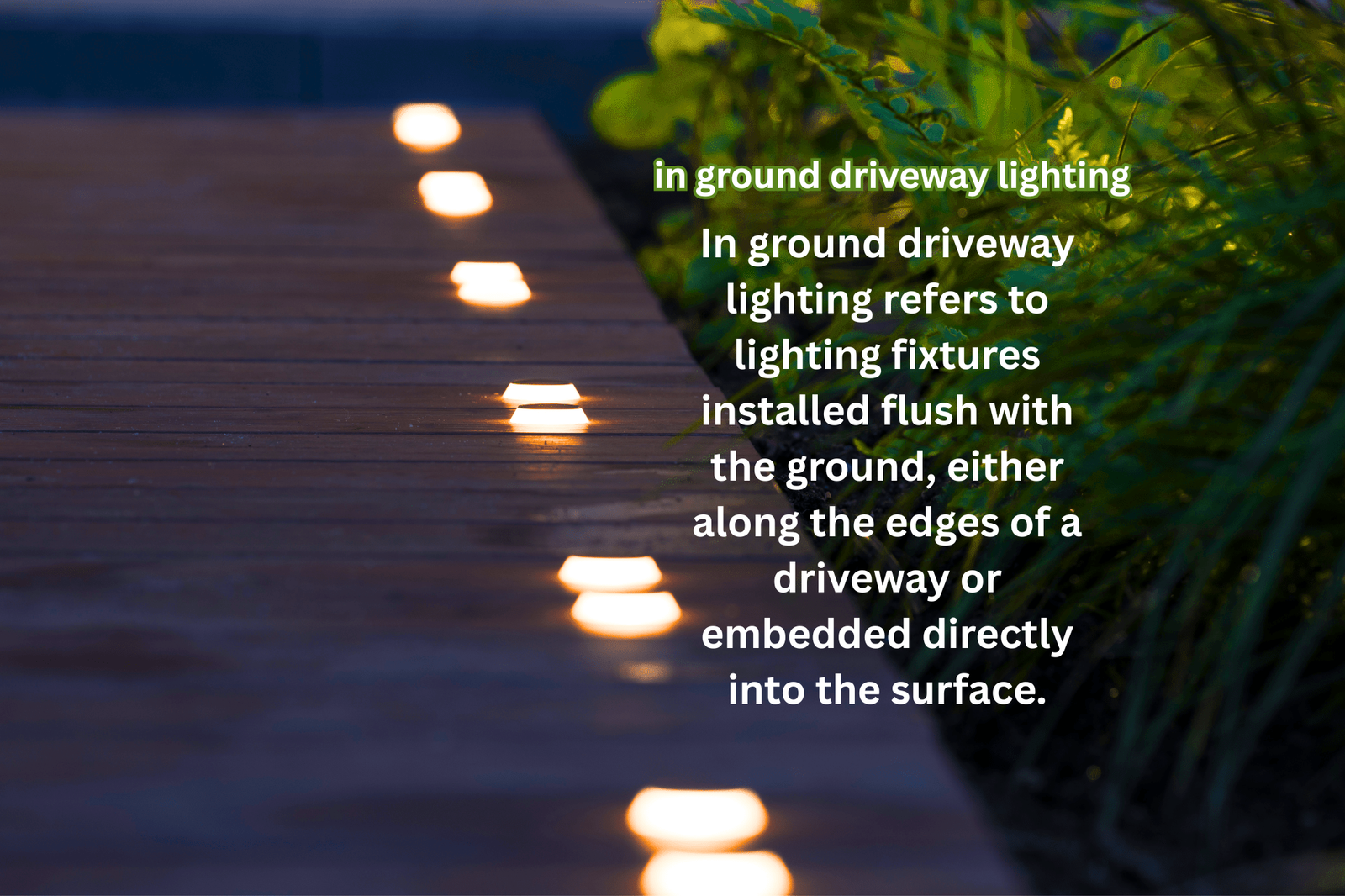
What Is In Ground Driveway Lighting?
In ground driveway lighting refers to lighting fixtures installed flush with the ground, either along the edges of a driveway or embedded directly into the surface. Unlike traditional lamp posts or wall-mounted lights, these fixtures are low-profile and unobtrusive, allowing vehicles and pedestrians to pass safely while illuminating pathways and landscaping.
These lights are typically made from durable materials such as stainless steel, brass, or aluminum, often with tempered glass covers to protect the LED lights inside. This ensures that in ground driveway lighting can withstand harsh weather, vehicle traffic, and general wear over time.
LED technology is commonly used in in ground driveway lighting for its energy efficiency, longevity, and bright illumination. LEDs consume far less power than traditional bulbs and can last up to 50,000 hours, making them an excellent long-term investment for homeowners.
Homeowners who prefer a modern, minimalistic look often choose in ground driveway lighting because it integrates seamlessly into driveways and landscapes. The clean appearance enhances aesthetic appeal without adding bulky or obtrusive elements.
Why Choose In Ground Driveway Lighting for Your Driveway
Safety and Visibility
Safety is the most important reason to consider in ground driveway lighting. At night, driveways can be difficult to navigate, especially in areas without streetlights or with irregular terrain. These lights clearly mark edges, curbs, and garden beds, reducing the risk of accidents.
They also guide pedestrians, helping prevent trips or falls in dimly lit areas. Even in winter, when snow or rain can obscure the driveway, in ground driveway lighting provides a visual guide, enhancing overall safety for vehicles and foot traffic.
Elegant Appearance and Curb Appeal
In ground driveway lighting offers a subtle, sophisticated aesthetic that traditional posts or wall-mounted lights cannot match. By illuminating curves, entryways, or landscaped borders, these lights create a welcoming atmosphere at night.
The curb appeal of a property increases significantly with thoughtful in ground driveway lighting. Even minimal light placement along a driveway edge can make the home feel more upscale and polished, highlighting architectural and landscape features beautifully.
Durability and Low Maintenance
High-quality in ground driveway lighting is built to withstand outdoor elements, including rain, snow, heat, and even vehicle weight if rated for drive-over applications. Unlike above-ground fixtures, these lights are less prone to accidental damage or tipping over.
LED bulbs in in ground driveway lighting require minimal maintenance, consuming less electricity while providing consistent illumination for years. Cleaning is generally as simple as wiping the lens occasionally.
Flexibility in Design
In ground driveway lighting provides design flexibility in both function and appearance. Warm white LEDs create a cozy, inviting ambiance, while cooler tones are ideal for functional, bright illumination.
They can be used to mark boundaries, accentuate landscaping, or create artistic effects. Some modern in ground driveway lighting options include RGB color choices, motion sensors, or programmable sequences, allowing homeowners to personalize their outdoor lighting.
Choosing the Right In-Ground Driveway Lights
Materials and Durability
When selecting fixtures, durability is crucial. Stainless steel, brass, and aluminum are the most common materials, offering resistance to corrosion and wear. Tempered glass lenses protect the internal components and can handle significant weight if vehicles drive over them.
Always check the load-bearing rating of in ground driveway lighting if installed on a driveway. Walk-over rated fixtures are suitable for foot traffic, but drive-over rated lights are necessary for vehicles.
Waterproofing and Ratings
For outdoor lighting, a high IP rating is essential. IP67 or higher ensures in ground driveway lighting is fully protected against dust and water immersion. This is particularly important for driveways, where water accumulation can occur during rain.
In addition to waterproofing, check for impact resistance ratings (IK ratings). An IK10 rating indicates strong protection against physical impacts, which is important for long-lasting performance.
Light Source and Brightness
LEDs are preferred for in ground driveway lighting due to their energy efficiency and long life. Warm white (2700–3000K) creates a cozy atmosphere, while neutral or cool white (4000K–5000K) provides bright, functional illumination.
Proper spacing ensures even lighting without dark spots or glare. Planning and testing the layout before installation is recommended to get the best effect from in ground driveway lighting.
| Feature/Aspect | Details |
|---|---|
| Product Name | In-Ground Driveway Lighting |
| Type | Outdoor low-profile LED lighting |
| Purpose | Illuminate driveways, walkways, and landscape areas; enhance safety and aesthetics |
| Materials | Stainless steel, brass, aluminum alloy, tempered glass lens |
| Light Source | LED |
| Color Temperature | Warm white (2700–3000K), Neutral white (3500–4000K), Cool white (4000–5000K) |
| IP Rating | IP67 or higher (waterproof and dustproof) |
| Impact/Load Rating | Walk-over and Drive-over rated (IK10 or as specified) |
| Voltage | Low-voltage LED (typically 12V–24V) |
| Applications | Driveways, walkways, gardens, patios, steps, pool areas |
| Benefits | Safety, curb appeal, minimal maintenance, energy efficiency, elegant design |
| Durability | High resistance to weather, foot traffic, and vehicle weight |
| Installation | Flush-mounted into ground, concrete, or soil; may require professional installation |
| Maintenance | Periodic lens cleaning, seal inspection, wiring checks |
| Design Options | RGB options, motion sensors, programmable sequences, adjustable brightness |
| Typical Lifespan | 30,000–50,000 hours (LED) |
| Cost Range | Moderate to high (depending on materials, type, and installation) |
| Ideal Users | Homeowners, landscape designers, property managers |
| Key Feature | Combines safety, functionality, and aesthetic appeal in a low-profile outdoor lighting solution |
Installation Tips
Plan Your Layout – Decide where lights will go based on driveway shape, curves, and surrounding landscaping. Consider pedestrian and vehicle paths.
Consider Drainage – Proper drainage prevents water pooling around fixtures, extending the life of in ground driveway lighting.
Use Low-Voltage Wiring – Low-voltage LED systems are safer, energy-efficient, and easier to maintain. Protect wires in conduits from moisture or accidental breaks.
Hire a Professional – Installing in ground driveway lighting correctly can be complex, especially on driveways that must handle vehicle weight. Professionals ensure proper alignment, secure wiring, and compliance with safety standards.
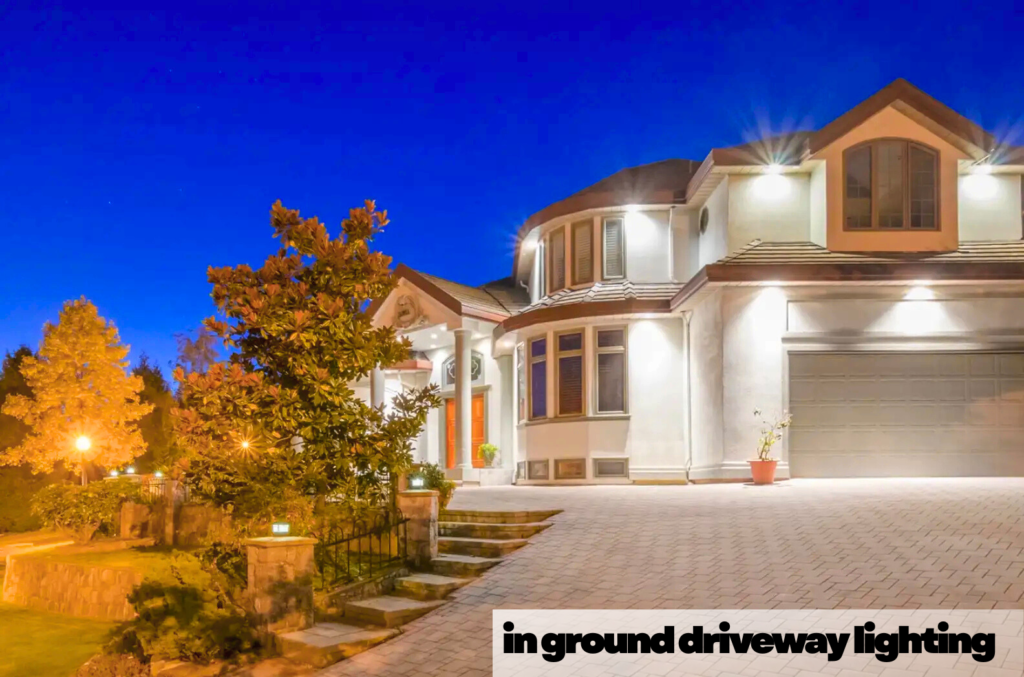
Benefits Beyond Driveways
In ground driveway lighting is versatile and can enhance many areas:
- Garden Paths and Walkways – Illuminate pathways without bulky posts.
- Landscape Features – Highlight trees, shrubs, or decorative elements at night.
- Patios, Steps, and Pools – Outline steps, patios, or pool edges, adding safety and ambiance.
Overall, in ground driveway lighting combines practical illumination with decorative effects that elevate outdoor aesthetics.
Potential Challenges
Higher Initial Cost
The upfront cost of in ground driveway lighting is higher than traditional lighting, due to durable materials and professional installation. Long-term durability and low maintenance often offset the initial expense.
Maintenance Considerations
While low-maintenance, in ground driveway lighting requires occasional lens cleaning, seal checks, and wiring inspection, especially after extreme weather.
Not Always Sufficient Alone
In ground driveway lighting is excellent for marking boundaries and accents but may need supplemental lighting for large or expansive driveways. Combining with wall-mounted or floodlights ensures full coverage.
How to Maximize Your In-Ground Lighting
- Create a Layout Plan: Mark light positions, spacing, and angles for optimal effect.
- Select Fixture Types: Use a combination of walk-over and drive-over rated lights.
- Integrate Smart Controls: Motion sensors or timers optimize energy use.
- Accent Landscaping: Highlight trees, shrubs, or garden features for a polished look.
- Consider Seasonal Changes: Ensure lighting effectiveness in snow, fallen leaves, or plant growth.
With proper planning, in ground driveway lighting can enhance both safety and beauty year-round.
Conclusion
In ground driveway lighting is a modern, elegant, and practical solution for improving safety, aesthetics, and usability of outdoor spaces. Proper installation ensures that these lights blend seamlessly into landscapes while guiding vehicles and pedestrians safely.
By choosing quality materials, considering waterproof and load ratings, and planning placement carefully, homeowners can enjoy a driveway that is safe, visually appealing, and professionally illuminated. Whether highlighting landscaping, defining boundaries, or improving nighttime safety, in ground driveway lighting is a versatile choice that adds value and sophistication to any property.
FAQs
Q: What is in ground driveway lighting?
A: In ground driveway lighting is flush-mounted lighting installed along or within a driveway to improve safety and aesthetics at night.
Q: Are in-ground lights safe to drive over?
A: Yes, if you choose “drive-over rated” fixtures, they are designed to handle vehicle weight safely.
Q: Do in-ground driveway lights use a lot of electricity?
A: No, most use energy-efficient LED bulbs that consume minimal power and last for many years.
Q: Can in-ground lights withstand rain and snow?
A: Yes, high-quality fixtures with IP67 or higher ratings are waterproof and durable in harsh weather conditions.
Q: How far apart should in-ground driveway lights be placed?
A: Typically 8–10 feet apart along the edges, with closer spacing near curves or entrances for even illumination.

