


Who is Shalanda Baker — Early Life & Background
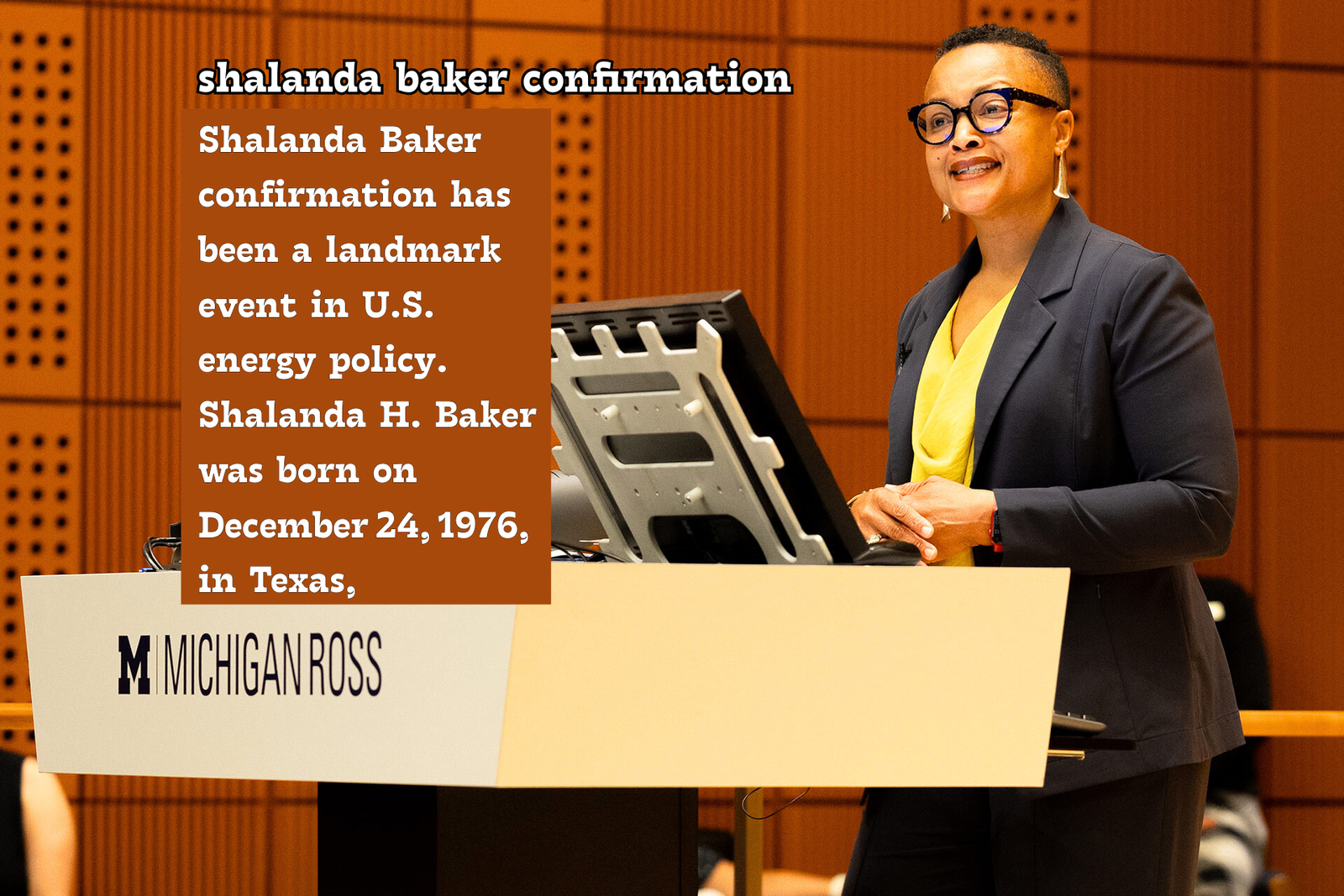
Shalanda Baker confirmation has been a landmark event in U.S. energy policy. Shalanda H. Baker was born on December 24, 1976, in Texas, growing up in Austin in a household shaped by resilience and firsthand experiences of systemic challenges. Her father grew up near a large oil refinery, and her mother’s household experienced energy insecurity, sometimes using the oven to heat their home. These experiences inspired Baker’s lifelong dedication to energy justice.
From a young age, Baker demonstrated curiosity, leadership, and determination. Her early exposure to environmental hazards and poverty motivated her to focus on policies that could improve communities often overlooked in national energy decision-making. Her personal story became a core part of the shalanda baker confirmation narrative.
Education and Early Career
Baker attended the United States Air Force Academy, earning a Bachelor of Science in Political Science in 1998. She was active in sports, including Women’s Rugby, and developed leadership skills that later shaped her academic and policy career.
She earned a Juris Doctor (J.D.) from Northeastern University School of Law and a Master of Laws (LL.M.) from the University of Wisconsin Law School. Professionally, Baker served as an officer in the U.S. Air Force and later worked as a corporate and project-finance lawyer in Boston and Tokyo. These experiences gave her unique insights into the intersection of law, policy, and energy infrastructure — a perspective central to the shalanda baker confirmation process.
Transition to Academia and Energy Justice
Baker later transitioned to academia, teaching law at the University of San Francisco School of Law and the University of Hawai‘i William S. Richardson School of Law. She co-founded the Initiative for Energy Justice (IEJ), focusing on equitable distribution of clean-energy benefits to historically marginalized communities.
In 2021, she published Revolutionary Power: An Activist’s Guide to the Energy Transition, emphasizing that energy policy must prioritize civil rights. Her work in energy justice became a key talking point during her shalanda baker confirmation, showing her as a national leader in sustainable and equitable energy solutions.
Nomination and Confirmation at the DOE
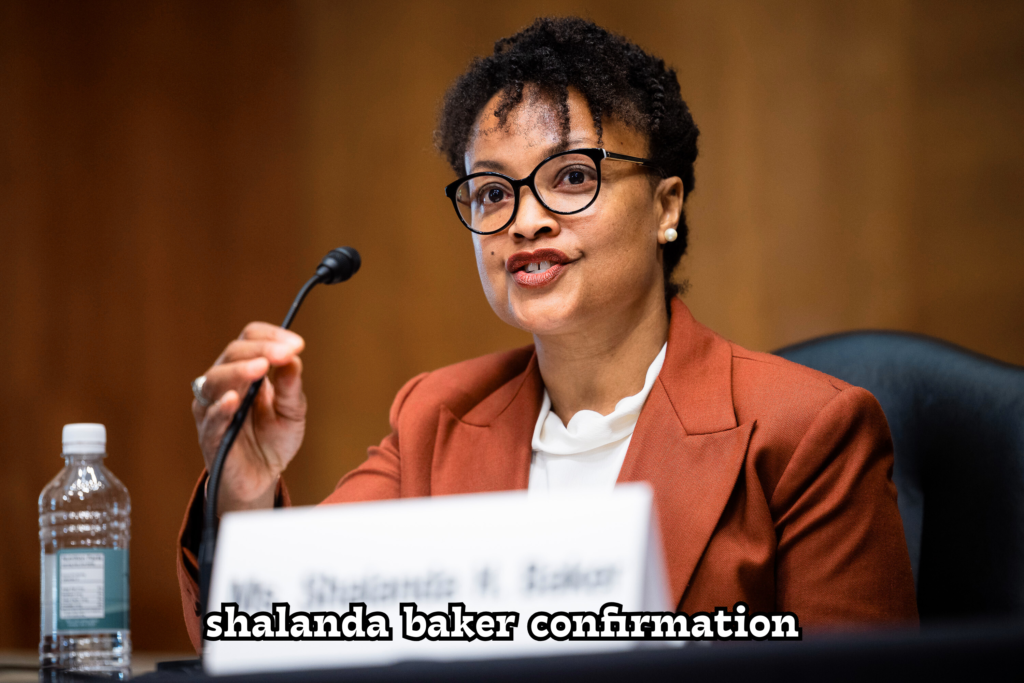
In April 2021, President Joe Biden nominated Baker as Director of the Office of Economic Impact and Diversity at the U.S. Department of Energy. During the confirmation hearing, she shared personal experiences with energy insecurity, highlighting how such challenges shaped her vision for energy justice.
Although her initial nomination lapsed, she was renominated in January 2022. The Senate officially confirmed her on June 7, 2022, marking a historic moment. The shalanda baker confirmation was celebrated as a significant step in embedding equity and fairness into federal energy policy.
| Attribute | Details |
|---|
| Full Name | Shalanda H. Baker |
| Date of Birth | December 24, 1976 |
| Age | 48 (2025) |
| Birthplace | Austin, Texas, USA |
| Education | B.Sc. – USAF Academy, J.D. – Northeastern, LL.M. – Wisconsin |
| Occupation | Lawyer, Academic, Energy Justice Advocate |
| Current Role | Vice Provost – University of Michigan |
| Previous Role | DOE Director, Office of Economic Impact & Diversity |
| Notable Achievements | Led Justice40, co-founded Initiative for Energy Justice, authored Revolutionary Power |
| Family | Openly lesbian; private details limited |
| Social Media | LinkedIn presence |
| Net Worth | Not disclosed |
| Focus Areas | Energy Justice, Climate Equity, Inclusion |
Impact at the Department of Energy
After her shalanda baker confirmation, Baker led the implementation of the Justice40 Initiative, ensuring 40% of federal clean-energy investments reached disadvantaged communities. She expanded the Office of Economic Impact and Diversity, later rebranded as the Office of Energy Justice and Equity, creating lasting frameworks for inclusive energy policy.
Her work strengthened partnerships with community organizations, universities, and local governments, ensuring that federal programs directly benefited historically marginalized populations. The shalanda baker confirmation signaled a broader commitment to equity in U.S. energy policy.
Post-DOE Career and Academic Leadership
After stepping down from DOE in June 2024, Baker became Vice Provost for Sustainability and Climate Action at the University of Michigan, Ann Arbor. She continues to shape climate policy and sustainable energy solutions, mentoring students and advancing research on energy justice, building on her legacy from the shalanda baker confirmation.
Her academic leadership emphasizes that clean-energy transitions must be both environmentally sustainable and socially equitable, reflecting the principles she championed during her DOE tenure.
Personal Life and Values
Baker is openly lesbian and has shared that her experiences in the military strengthened her dedication to justice and fairness. While details like net worth, height, or lifestyle remain private, her professional life highlights a commitment to equity and inclusion. Baker’s public advocacy and the shalanda baker confirmation underscore her belief that energy policy must address systemic inequalities and protect vulnerable communities.
Significance of Her Confirmation
The shalanda baker confirmation marked a shift in U.S. energy policy, highlighting the importance of integrating social justice into federal programs. By embedding equity into DOE initiatives, Baker set a precedent for future energy leadership and ensured that clean-energy investments reached those historically excluded from policy benefits.
Her leadership demonstrates that energy policy and social justice are deeply interconnected, showing that technological innovation must go hand in hand with fairness. The shalanda baker confirmation therefore represents not only a personal achievement but also a milestone in national energy equity.
Legacy and Continuing Influence
Shalanda Baker’s career trajectory — from childhood energy insecurity to federal leadership and academic influence — illustrates how lived experience can shape public service. Her work in energy justice continues to influence policies and inspire communities, building on the foundation established by her shalanda baker confirmation.
Through publications, advocacy, and mentoring, Baker has created a roadmap for integrating justice into energy policy. Her confirmation at DOE ensured that the next generation of leaders and policymakers considers equity as central to climate action.
Conclusion
The shalanda baker confirmation is a story of resilience, expertise, and visionary leadership. Baker’s work demonstrates that energy transitions can be both effective and equitable, balancing technological progress with social justice. Her impact on federal policy and academic leadership continues to inspire change, showing how a personal commitment to fairness can shape national policy and benefit countless communities.
FAQs
Q1: Who is Shalanda Baker?
A: Shalanda Baker is an energy justice advocate, lawyer, and academic who was confirmed as Director of the Office of Economic Impact and Diversity at the U.S. Department of Energy.
Q2: When was Shalanda Baker confirmed?
A: She was officially confirmed by the U.S. Senate on June 7, 2022, after being renominated following an initial lapse.
Q3: Why was Shalanda Baker’s confirmation significant?
A: Her confirmation marked a historic step toward embedding equity and justice in federal energy policies, ensuring benefits reach disadvantaged communities.
Q4: What initiatives did she lead at the DOE?
A: Baker led the Justice40 Initiative and expanded the DOE’s equity programs, promoting inclusive energy policies and community engagement.
Q5: What is Shalanda Baker’s current role?
A: After DOE, she serves as Vice Provost for Sustainability and Climate Action at the University of Michigan, continuing to drive energy justice and sustainable policy solutions.

